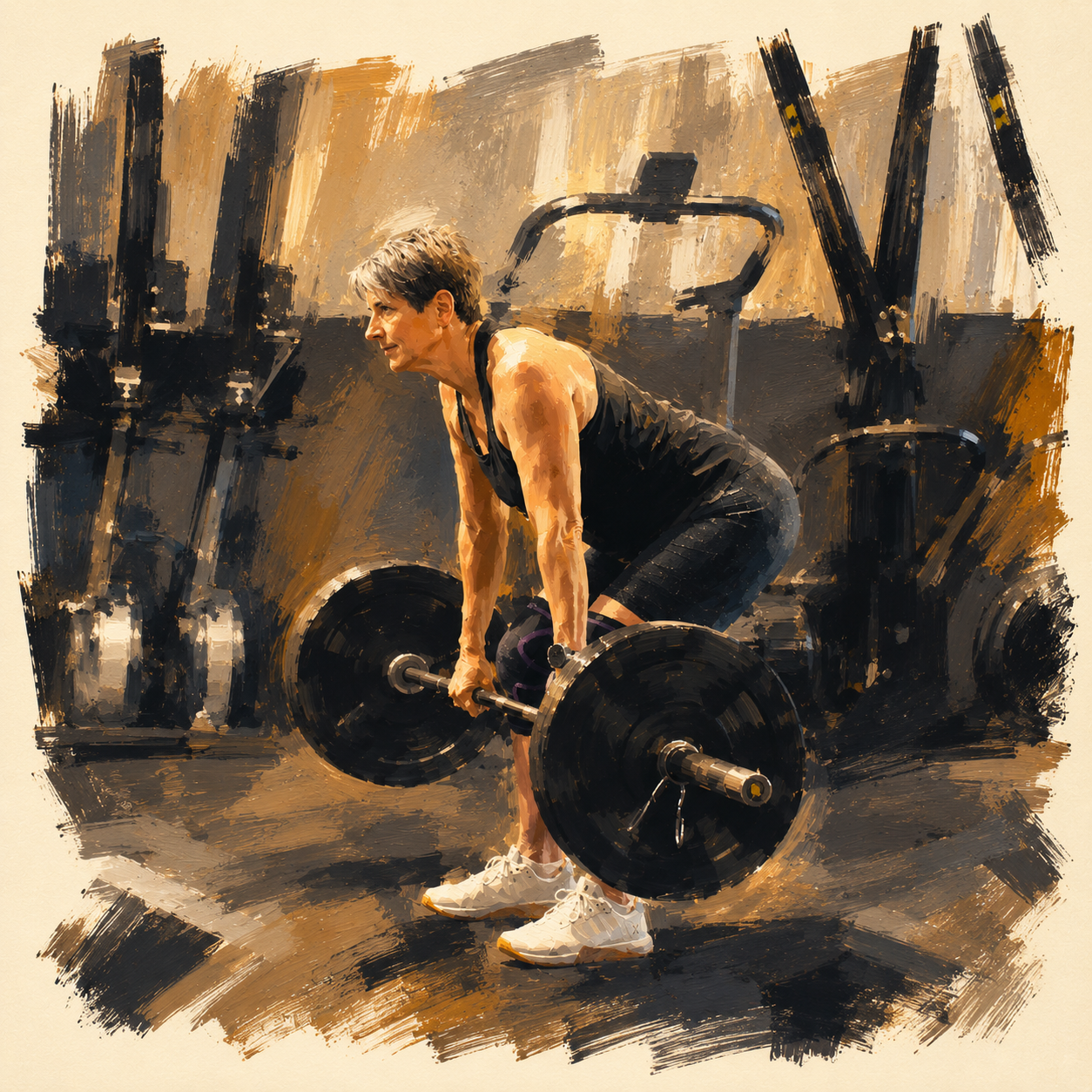
Grandma's Deadlifting Now
The strength training world is finally welcoming in the people it used to warn away.
I have been telling older people for decades that they need to lift. Few believed me. The common thought was that it just wasn't for "old people." Now I have a gym full of these "old people," mostly because they've been training with us for fifteen-plus years. And what's changing is bigger than my own gym. Common knowledge is finally swinging toward the truth we've known for years. We're starting to see more and more people get started with fitness, and yes, lifting, in their fifties and sixties.
It's a good problem to have. For most of my career, the advice going the other direction was loud and confident. Take it easy. Stick to walking. Maybe some light stretching, some water aerobics if you're feeling ambitious. Don't lift anything heavy, you'll hurt yourself. That was the conventional wisdom, and it came from a good place. Nobody wanted to see an older person get injured.
It also happened to be some of the worst advice in the history of fitness.
The Old Advice Had It Backwards
Here's the part that should have been obvious from the start. Aging doesn't cause weakness by itself. Disuse does. Starting around age thirty, adults lose roughly three to five percent of their muscle mass per decade if they do nothing to stop it, and that decline accelerates hard after sixty. Left unchecked, most men lose close to a third of their total muscle mass over the course of adulthood. That loss is not a cosmetic problem. It's the direct pipeline to falls, fractures, and the loss of independence that turns a healthy eighty year old into someone who needs help getting out of a chair.s
Telling an older adult to avoid resistance training wasn't protecting them. It was accelerating the exact decline everyone was trying to prevent.
The research on the other side of this has become hard to ignore. Resistance training in older adults reliably improves grip strength, gait speed, and the ability to get up out of a chair without using their hands, three of the clearest predictors we have of whether someone stays independent as they age. It builds lean mass back. It improves balance and reduces fall risk. It helps manage blood pressure and cholesterol. There is no pill that does all of that at once, and there is no other intervention with a comparable track record.
The Culture Is Catching Up to the Science
What's changed isn't just the research. It's who the research is finally reaching.
The people writing exercise guidelines have started saying it plainly. Muscle-strengthening activity, twice a week, is now part of the official physical activity recommendation for adults of every age, older adults included. Medical professionals are starting to prescribe it the way they'd prescribe a medication, not offer it as an optional extra. Gyms and training programs built specifically around older populations are growing, and the equipment and coaching inside them has gotten better at meeting people exactly where they are instead of assuming everyone over sixty needs the same modified, watered down version of a workout.
I'll be honest about where things stand. This shift hasn't reached everyone yet. Most older adults still aren't meeting the guidelines, and adults over sixty-five remain the least active age group by a wide margin. This isn't about a finish line we've crossed. It's about a door that used to be closed and is now standing open, with more people walking through it every year than at any point I can remember in this industry.
What I've Watched Happen
The numbers matter, but what convinces me isn't a chart. It's the members.
It's the woman in her seventies who came in barely able to carry her own groceries and can now do a proper deadlift with more control than most people half her age. It's the guy who showed up after a hip replacement, terrified of ever loading his body again, who now does goblet squats without a second thought. These aren't outliers I'm cherry-picking to make a point. This is what happens, consistently, when someone who was told to take it easy for decades finally gets permission and proper coaching to do the opposite.
What strikes me every time is how much unnecessary fear got built up over years of well-meaning bad advice. People walked away from strength training for half their lives because someone told them it was dangerous, when the actual danger was never picking it up at all.
Where This Leaves Us
We're not at the finish line. Too many people are still sitting on the sidelines, still repeating advice that should have expired twenty years ago. But the direction is right, and the direction matters. The research has shifted, the guidelines have shifted, and slowly, the culture is shifting with them.
If you're older and you've been putting this off because somebody once told you it wasn't safe, I'd ask you to reconsider who gave you that advice and whether it was ever built on anything solid. The bar doesn't care how old you are. Neither does your body, once you start giving it a reason to adapt.
See you in the gym. —JG